


- On sale!
- -10%
Discover our collection of design poufs for living room, bedroom or entryway use, in velvet, technical fabric, leather or natural fibers. Every product page includes exact measurements and filling so you can choose with confidence.


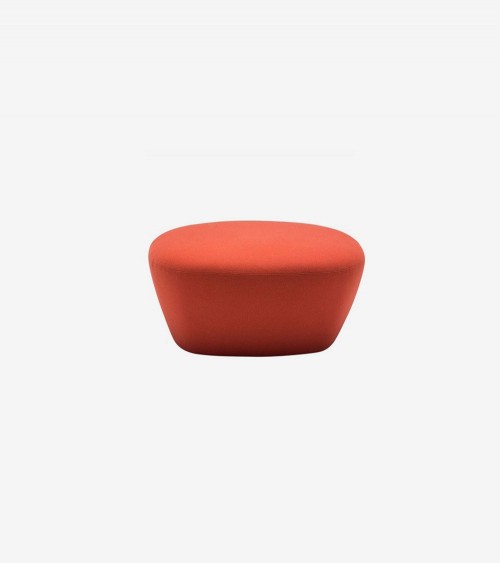


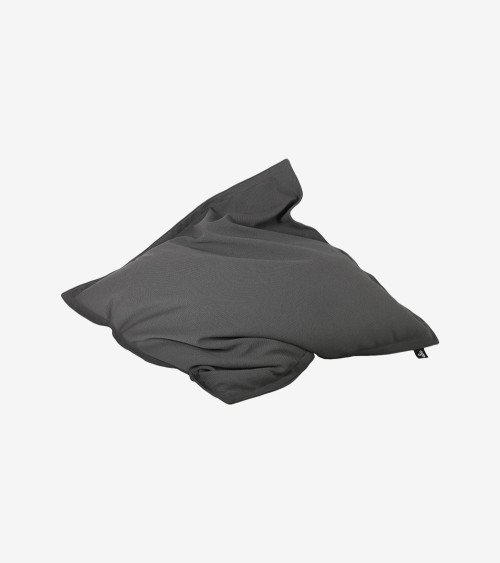

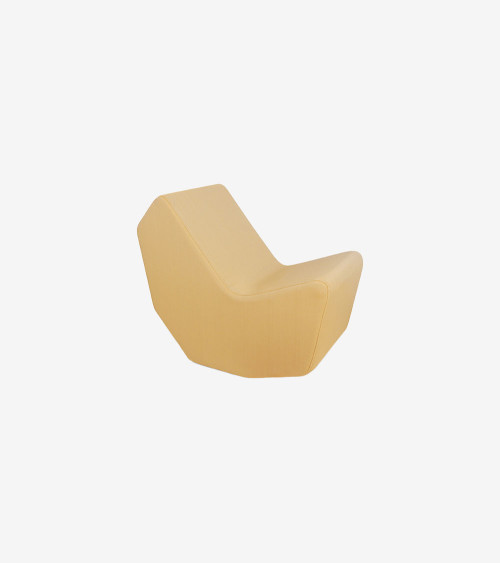
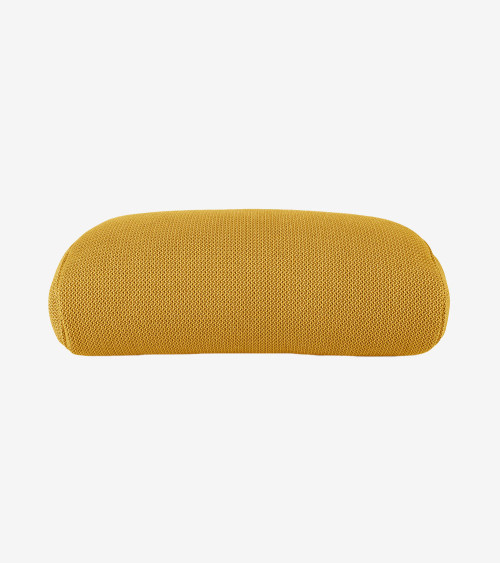
Design poufs have gone from being a secondary accessory to becoming a versatile piece that combines seating, a footrest, and a decorative element in one object. At Exento we select poufs for their design, materials, and real ability to adapt to different spaces in the home.
A design pouf is a low seat, usually without a backrest or arms, meant to mold to the body or hold a fixed shape depending on its filling. It stands apart from a regular pouf through careful materials, finishes, and proportions — not just an extra seat, but a piece that can carry the composition of a corner on its own.
The historic reference for this type of furniture is the Sacco (1968), designed by Piero Gatti, Cesare Paolini, and Franco Teodoro for Zanotta: the first pouf filled with polystyrene beads, able to adapt to any body posture, and still manufactured today.
In the living room, a pouf works as extra seating or a footrest alongside armchairs and lounge chairs, and its compact size makes it especially useful in small apartments. In the bedroom, it's typically placed at the foot of the bed or in a reading corner, doubling as support for clothes or accessories. In the entryway, it offers a quick seating point without taking up the space of a larger piece.
As a reference from our interior design team: a pouf between 40 and 50 cm high works well as a footrest next to a standard sofa (typically around 40-45 cm seat height), while taller models, 55-60 cm, work better as an independent seat.
Round poufs are the most versatile and go with any decorative style, with no sharp edges to complicate movement in tight spaces. Square ones are more functional as a support surface — an improvised table for a tray or a book — thanks to their flat top. And poufs with a backrest offer extra lumbar support that brings them closer to a lightweight armchair, ideal for reading or watching TV for longer stretches.
A real example of this last category is the Shape by MDD, a pouf with a backrest designed to fit the body's posture without losing the lightness typical of the pouf format.
The upholstery material determines both the feel and how easy the pouf is to maintain:
| Material | Main advantage | Maintenance |
|---|---|---|
| Velvet | Sophisticated look, soft feel | Regular brushing; avoid direct sun exposure |
| Technical fabric | Resistant to daily and kids' use | Wipe clean, suited to frequent stains |
| Leather / faux leather | Easy to clean, contemporary look | Damp cloth; avoid abrasive products |
| Natural fibers (rattan, jute) | Warm, natural look | Avoid prolonged moisture |
There are two valid ways to bring a pouf into your decor, and both work depending on the effect you're after. A matching pouf (same tone or color family as the main sofa or armchair) creates visual continuity and makes the whole set feel like a considered composition. A contrast-color pouf (a bold tone against a neutral palette) acts as a focal point and adds personality to the space, but requires more care in the choice: the wrong color can break the balance instead of reinforcing it.
As a practical rule, if the rest of the room already has several colorful elements, go for a matching pouf; if the setting is mostly neutral, a contrast pouf usually works better as an accent.
A square pouf with a flat, firm top can occasionally work as support for a tray or a book, but it doesn't reliably replace a design side table: the filling gives under weight and the surface isn't rigid. It's a one-off solution for events or guests, not a permanent replacement if you need to set things down regularly.
A pouf works best as a supporting piece, not a stand-alone focal point. It pairs well with design chairs in a reading corner, with coffee tables as extra seating when a gathering runs bigger than usual, or with armchairs as a matching footrest. To keep visual coherence, it helps to repeat at least one material or color between the pouf and the space's main piece (upholstery, base wood, or color tone).
At Exento we work with brands such as Andreu World, Enea, Gan Rugs, and MDD. Every product page includes exact measurements, materials, and filling, so your decision relies on concrete, verifiable data rather than generic photos.
If you host guests often, having 2 or 3 lightweight, stackable, or easy-to-move poufs solves the extra seating problem without buying a sofa bigger than what you use day to day. It's a more flexible solution than upsizing your main sofa: poufs get stored, grouped, or spread around the house depending on the occasion, while an oversized sofa takes up space permanently even when you don't need it most of the time.
With a damp cloth and mild soap for surface stains. For deeper stains, a specific upholstery cleaner or a professional cleaning service works best, depending on the fabric type.
Several years under normal use, as long as you avoid jumping on it or placing heavy objects on it continuously, which compacts the filling irreversibly.
Between 40 and 50 cm, to sit at a similar or slightly lower height than the sofa seat and avoid forcing your leg posture.
Yes, and they're a common choice in kids' rooms thanks to their light weight and lack of rigid structure, though it's worth checking that the cover is removable and washable for heavy use.